Use of Conveyors in Mining
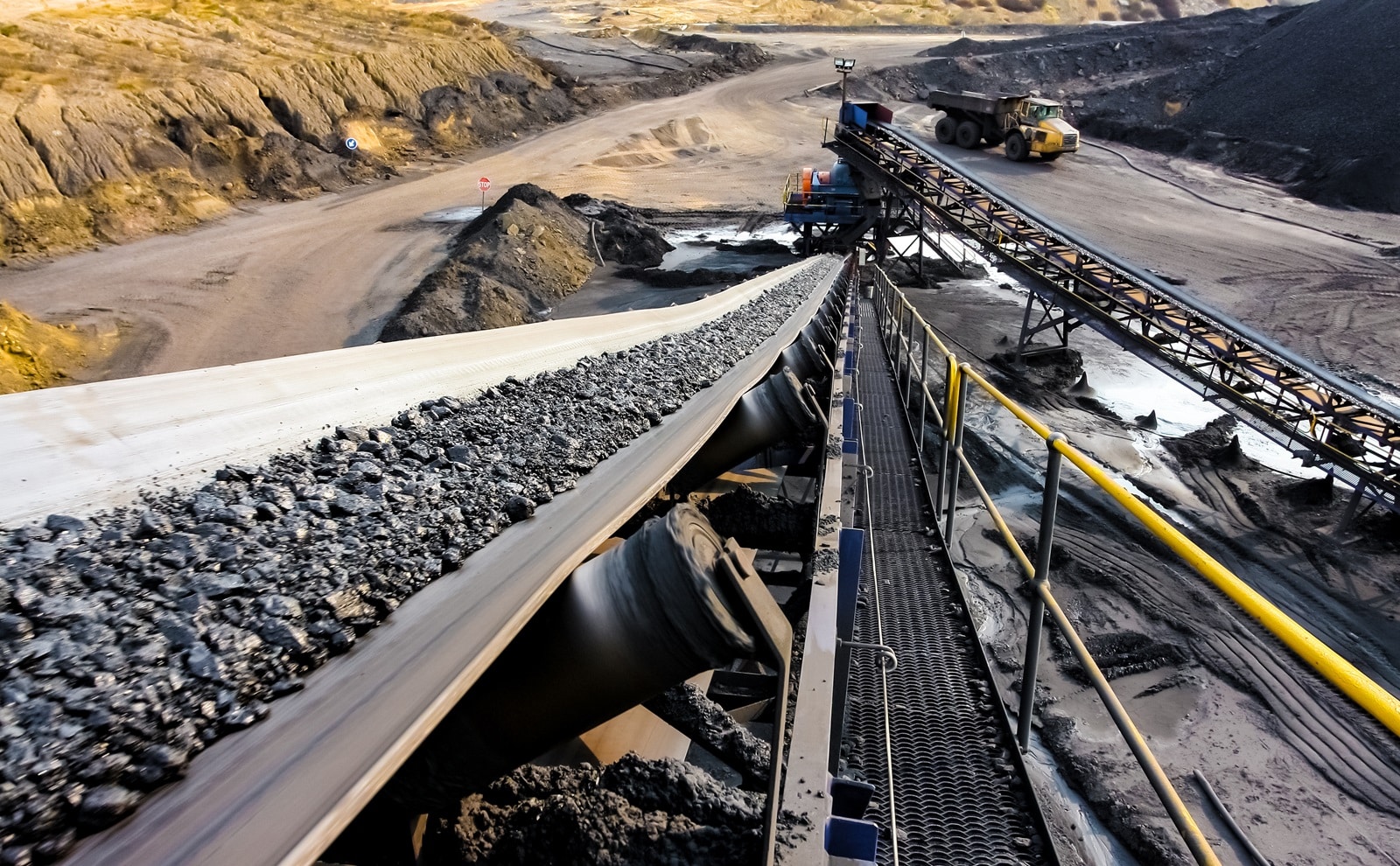
Mechanical conveyors are used for transporting most bulk solids (sand, ash, grains etc.) handling.
They are used not only in transportation of bulk solids from one location to another location but also for feeding, discharging, metering and proportioning such materials to and from bulk solids storage silos and other solids handling and processing equipments.
Conveyor is a device which is used for continuous transportation.
Conventional Belt Conveyors
Belt conveyors are most versatile and widely used mechanical conveyors. They are used for transportation, feeding, discharging bulk solid material. This conveyor is suitable to almost dry type of material free flowing solid to met stocky and lumpy powders. Normal belt may be conveyed at angle of inclination of upto 22°. The bulk material on the belt conveyor is discharged over the drive pulley of other conveyors.
The capacity of belt conveyor depends on speed, shape and width of belt, method of feeding and solid properties. Belt conveyor are the most common form of material handling system used in manufacturing and mining industries thermal plants and in construction projects.
Heavy industries like steel, fertilizer, chemical and cement etc. cannot function without the belt conveyors. In construction project the belt conveyors are used for handling. The material in asphalt plant, crushing and screening plants, aggregates mixing plants etc. In coal mining and other mining industries these are used for handling coal or other raw material. The belt conveyors are capable of conveying large quantities of material continuously over considerably long distances at a fast speed.
For transporting the material for short distances conveyors may be a portable or a fixed unit. When a belt conveyor system is to be used to transport for a considerable distance upto several kilometres in such cases, the system consists of a number of flights. Each flight is a complete conveyor unit discharging its load on the tail end of the successive unit. Belt used in the system are costly and hence needed to be carefully maintained. The belts are generally made of rubber cover cotton or rayon laid up in the plies. The strength of the rubber belt depends on number of plies, canvas plies. Wooden wire mesh and steel belts are also used depending upon the strength required for the conveyor to conveying various types of materials, their quantity to be transported etc. Belts are specified by width, number of plies and weight of each layer of ply.
These include conveyors using fabric-ply belting and conveyors using fabric free steel cord belting.
Components of conveyor
Following are conveyor components:
The belt which carries the material and transmits the tension or pull.
The idlers which support the carrying and return strands or runs of the belt.
The pulleys which support and move the belt and control its tension as well change its directions.
The drive which transmits the motive power to one or more pulleys to move the belt and its carrying load.
The structure which supports and maintains the alignment of idlers and pulleys.

Following figure shows typical layouts of conveyors. Belt conveyors can be designed for practically any desired path of travel.

Flat Belt Conveyor
These types of conveyors are simple in design are simple uses flat belts supported on a single idlers.
The width and thickness of belt depends on the material to be conveyed generally used for shorter distance.
Major problem is a spillage of material from a belt surface at higher speeds.
Upper rollers have low pitch as lower rollers have high pitch.
Trough Belt Conveyors
Though Belt Conveyors are designed to leverage the open frame and trough effect of the Rubber Belt Conveyors to fully contain the load of materials. Trough belt conveyors are the most widely used and efficient means of moving bulk materials Trough conveyors for light to medium capacity systems. These conveyors are used in areas of cement, coal packing, food indry, sand & gravel and package handling.

Trough belt conveyor is that in which the belt forms a trough on the carrying side while running over idler rollers which are either in set of 5 rolls, 3 rolls or 2 rolls. The troughing angle adopted are: 15°, 20° , 25° , 30° , 35° , 40° , 45° . Return Idlers are usually straight roller type.
Trough belt conveyors are used for higher capacity, higher speed requirement, and for handling bulk material of large lump size. It suitable for inclined or declined type conveyors.
Transition distance is defined as the distance from the center line of the first fully troughed idler roll to the center line of either the head or tail pulley. The distance from the pulley to the top of the wing idler is certainly greater than the distance from the pulley to the center roll of the troughing set. If the transition distance is too short, the edge of the belt can be over stretched. This will adversely affect the load support and belt life.
Scraper Chain Conveyors
These types of conveyors have been designed to withstand rigorous mining conditions particularly at a working face, which is always advanced ahead. These conveyors can negotiate gradient of more than 18° i.e. more than the belt conveyors usually negotiate.

These conveyors are easily extendible without their dismantling but their length is limited and usually not more than 200 m. A scraper chain conveyor consists of the following parts (see figure): Troughs; Endless chain/chains (which may be one or two depending upon the design); Sprocket wheel; Drive head having motors, gears, tensioning devices and other parts.
Subscribe to our newsletter for updates on DGMS and other mining engineering exam
Study material for DGMS and other mining engineering exams
WhatsApp channel: Miners Adda


Comments