
Prevent Expensive Downtime by Scheduling Regular Boiler Maintenance
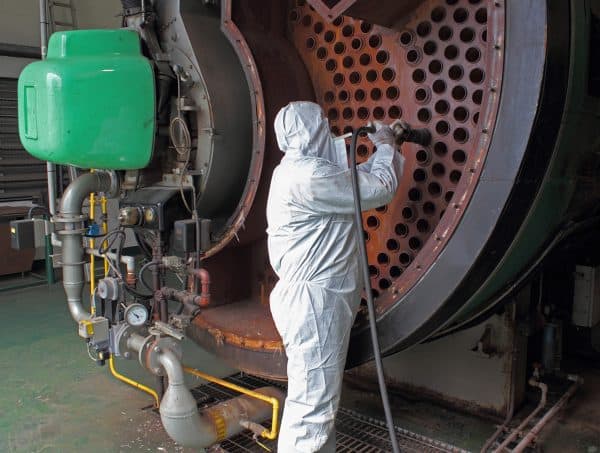
Firetube boilers serve as the backbone of countless facilities, ranging from industrial plants and hospitals to prisons and residential complexes. Their dependable performance is vital, as any sudden breakdown can result in significant repercussions, such as mandatory shutdowns, patient relocations, or extensive operational interruptions. Although they play a crucial role, these boilers are frequently hidden away in hard-to-access boiler rooms, leading to routine maintenance being easily forgotten. However, overlooking a diligent cleaning and maintenance regime can prove to be an expensive oversight.

Join our WhatsApp Channel - The Indian Boiler Engineer for regular updates

The High Cost of Boiler Downtime

The consequences of a firetube boiler malfunction can differ based on its application, but the effects are generally negative. For example, in a hospital setting, a boiler failure could lead to an expensive and intricate patient transfer process. In a food processing plant, it might result in a total operational halt, leading to inventory loss and production delays. Even in an office building, a boiler issue could force temporary closure, significantly impacting productivity. While there are rental boilers that can serve as a stopgap solution, they come at a high cost and are meant for short-term emergencies like disaster recovery. Depending on them for prolonged periods to conduct emergency repairs on your main boiler can quickly become costly. Therefore, establishing a proactive maintenance schedule proves to be much more cost-effective than responding reactively.

Identifying the Need for a Cleaning

Consistent cleaning is fundamental for the maintenance of firetube boilers. The frequency of cleaning is generally determined by the operating hours of the boiler, with adjustments made based on the observation of critical metrics. A highly effective approach is to monitor the trend in stack temperature. Keeping a daily log of the boiler's stack temperature is an easy and effective method to assess its performance. If the stack temperature rises 10 degrees Celsius above normal, it's a strong warning that scale and other deposits have accumulated, indicating that a thorough cleaning is needed.

Signs of efficiency decline include a prolonged warm-up period and the boiler's inability to sustain a consistent, regulated temperature. Moreover, a sudden spike in fuel consumption compared to the boiler's load serves as a significant warning sign. Many facilities size their boilers to handle peak capacity. If the heating or steam requirements of the building are low while the boiler operates at full fuel input, it indicates a considerable efficiency loss due to the accumulation of deposits. Operators can also conduct a quick visual check of the exhaust from the stack. A properly functioning boiler emits light, nearly invisible exhaust; however, gray or black smoke suggests incomplete combustion, often resulting from dirty tubes.

The Importance of Regular Inspections and Cleaning

Incorporating regular cleaning into your facility's routine is essential. Begin with monthly or quarterly visual inspections. Many firetube boilers come with sight ports or peepholes, enabling operators to observe the flame directly. If the flame is hard to view or the sight glass is obscured, it serves as an immediate signal that cleaning is needed.

Beyond these routine checks, an annual physical inspection of the tubes is highly recommended. This is the time to look for the buildup of soot and slag, which are major culprits behind efficiency loss.

Subscribe to our newsletter for updates on Boiler Operation Engineering Exam 

Study material for BOE exams 

Join our WhatsApp Channel - The Indian Boiler Engineer for regular updates

Comments

Popular posts from this blog

Mechanics of Fluids (Solved Numerical Problems)

Numerical The surface Tension of water in contact with air at 20°C is 0.0725 N/m. The pressure inside a droplet of water is to be 0.02 N/cm² greater than the outside pressure. Calculate the diameter of the droplet of water. (7 marks) (AMIE Summer 2023) Solution Surface tension, σ = 0.0725 N/m Pressure intensity, P = 0.02 N/m 2 P = 4σ/d Hence, the Diameter of the dropd = 4 x 0.0725/200 = 1.45 mm Numerical Find the surface tension in a soap bubble of 40 mm diameter when the inside pressure is 2.5 N/m² above atmospheric pressure. (7 marks) (AMIE Summer 2023) Answer: 0.0125 N/m Numerical The pressure outside the droplet of water of diameter 0.04 mm is 10.32 N/cm² (atmospheric pressure). Calculate the pressure within the droplet if surface tension is given as 0.0725 N/m of water. (AMIE Summer 2023, 7 marks) Answer: 0.725 N/cm 2   Numerical An open lank contains water up to a depth of 2 m and above it an oil of specific gravity 0.9 for a depth of 1 m. Find the pressure intensity (i) at t...

Geotechnical & Foundation Engineering (Solved Numerical Problems)

Numerical A 1000 cc core cutter weighing 946.80 g was used to find out the in-situ unit weight of an embankment. The weight of the core cutter filled with soil was noted to be 2770.60 g. Laboratory tests on the sample indicated a water content of 10.45 % and specific gravity of solids of 2.65. Determine the bulk unit weight, dry unit weight, void ratio, and degree of saturation of the sample. (AMIE Summer 2023, 8 marks) Solution Weight of soil in core cutter = 2770.60 - 946.80 = 1823.8 g Bulk unit weight, γ t = W/V = 1823.8/1000 = 1.82 g/ccDry unit weight, γ d = γ t /(1 + w) = 1.82/(1 + 0.1045) = 1.65 g/cc Void ratio, e = (G s γ w /γ d ) - 1 = (2.65 x 1.0/1.65) - 1 = 0.61 Degree of saturation, S = wG s /e = (0.1045 x 2.65)/0.61 = 0.4540 = 45.4% Numerical What is the theoretical height of the capillary rise and the capillary pressure in fine-grained soil with an effective size (D 10 ) of 0.002 mm? (AMIE Summer 2023, 4 marks) Solution D 10 = 0.002 mm;  Using the assumption that th...

Energy Systems (Solved Numerical Problems)

Wind at 1 standard atmospheric pressure and \({15^0}C\) has velocity of 15 m/s, calculate (i) the total power density in the wind stream (ii) the maximum obtainable power density (iii) a reasonably obtainable power density (iv) total power (v) torque and axial thrust Given: turbine diameter = 120 m, and turbine operating speed = 40 rpm at maximum efficiency. Propeller type wind turbine is considered. (AMIE Winter 2023) Solution For air, the value of gas constant is R = 0.287 kJ/kg.K 1 atm = 1.01325 x 10⁵ Pa Air density \(\rho  = \frac{P}{{RT}} = \frac{{1.01325x{{10}^5}}}{{287}}(288) = 1.226\,kg/{m^3}\) Total Power \({P_{total}} = \rho A{V_1}^3/2\) Power density \(\begin{array}{l}\frac{{{P_{total}}}}{A} = \frac{1}{2}\rho {V_1}^3\\ = \frac{1}{2}(1.226){(15)^3}\\ = 2068.87{\mkern 1mu} W/{m^2}\end{array}\) Maximum power density \(\begin{array}{l}\frac{{{P_{\max }}}}{A} = \frac{8}{{27}}\rho A{V^3}_1\\ = \frac{8}{{27}}(1.226){(15)^3}\\ = 1226{\mkern 1mu} W/{m^2}\end{array}\) Assuming eff...